My Book and What I've Actually Read So Far
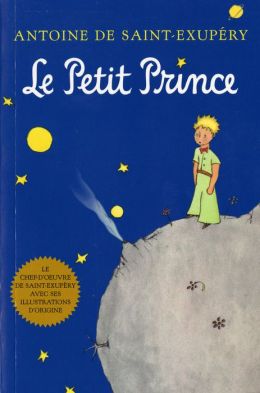
My copy of Le Petit Prince came for me yesterday! Yay!!!

So I have my book, the only problem is I can’t start reading or translating it yet. I still have some preliminary research to do. To be honest, I am not at the point I would like to be at with this project and I don’t know if I will be able to get through this whole book. I’m not sure how long it will take me to translate a section thoroughly and accurately. Obviously this is just practice translation, it’s not a full work that I’m trying to publish. Still, this will probably take more time than I had originally estimated. As Nicole and Carolyn have already suggested, I think I am going to have to reset my goal from translating the entire book to a set number of sections. I’ll determine the number of sections at a later time.
Despite the fact that I am not yet on to actually reading/translating the story, what I have been reading lately is very interesting. I have already reviewed the brochure from the American Literary Translators Association called The Making of a Literary Translator. It basically gave me an overview of what literary translation actually is and what it requires. The article mentioned the importance of reading through the work before translating, which I have already planned to do, the helpfulness of collaboration with other translators/authors/native speakers and the significant combination of meaning and sound. I don’t know any native French speakers but in terms of collaboration it might be helpful for me to meet with my French teacher, Madame Macdermott, to see if she would go over my translation with me. The idea behind the combination of meaning and sound is that a translation should not just portray the literal meanings of the words in another language but that it also must have the sound and the feel that makes that work art (7).
This theme was stressed in the other source that I have been reading, the book Literary Translation: A Practical Guide by Clifford E. Landers. According to this book, the general view is that a translation should provoke in its readers the same emotional response that the original provoked in its readers (Landers 49). I will need to keep this in mind when I begin my translation.The ideas is not to necessarily translate literally the words in the text but to translate the meaning and the effect that meaning has in terms of the target and culture language as it would in terms of the source culture and language. (Target language is the term for the language being translated into and source language is the language being translated from, in my case English and French respectively.) This book has been really helpful as well as really fascinating. It has given me a lot of insight on strategies to use when translating and I am beginning to read the section on techniques. I will continue to consult this book after I start translating and I plan to apply the techniques and strategies presented.
I’m really excited to get to the translation part already, but as my guides have stressed is important to do background research and to read through the text so that I can ground my translation in context. This weekend I plan to research what I can about Le Petit Prince, Antione de Saint-Exupéry, and the place this book has in French culture. As I am already behind, I want to get this done so that I can start reading this week. Of course, this week I’m going to be crazy busy because of the musical, but hopefully I will be able to get some reading done.
Sources:
American Literary Translators Association. The Making of a Literary Translator. N.p.: American Literary Translators Association, n.d. American Literary Translators Association. University of Texas at Dallas. Web. 18 Feb. 2013. <http://www.utdallas.edu/alta/pdf/TheMakingOfALiteraryTranslator.pdf>.
Landers, Clifford E. Literary Translation: A Practical Guide. N.p.: n.p., 2001. Multilingual Matters. Ebook Collection (EBSCO Host). Web. 28 Feb. 2013. <http://web.ebscohost.com/ehost/detail?sid=c0d77986-855f-4bfd-8226-de59c08ed92e%40sessionmgr11&vid=1&hid=28&bdata=JnNpdGU9ZWhvc3QtbGl2ZQ%3d%3d#db=nlebk&AN=90960>.